端口 & 界面
| 数字I / O引脚的数量 |
20 |
| 脉宽调制数字I / O引脚 |
7 |
| 模拟I / O引脚的数量 |
12 |
| 无线局域网连接 |
N |
| USB 端口数量 |
1 |
处理器
| 微控制器型號 |
ATMega32u4 |
| 微控制器頻率 |
16 MHz |
产品特点
| 输入电压(最大) |
6 - 20 V |
| 每I / O引脚的直流电流 |
40 mA |
| 格式要素 |
Arduino |
| 工作电压 |
5 V |
内存参数
| SRAM(静态随机存取存储器) |
2.5 KB |
| EEPROM(电子抹除式可复写只读存储器) |
1 KB |
| 闪存 |
0.032 MB |
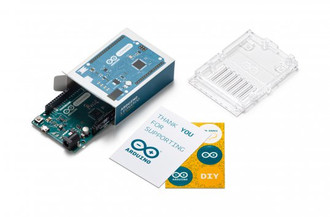
Leonardo with Headers, ATmega32u4, 16MHz, 20 Digital I/O Pins, 7 PWM Digital I/O Pins, 12 Analog Input Pins, 53.3 x 68.6 mm, 20 g
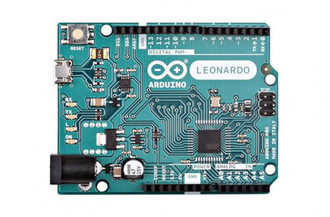
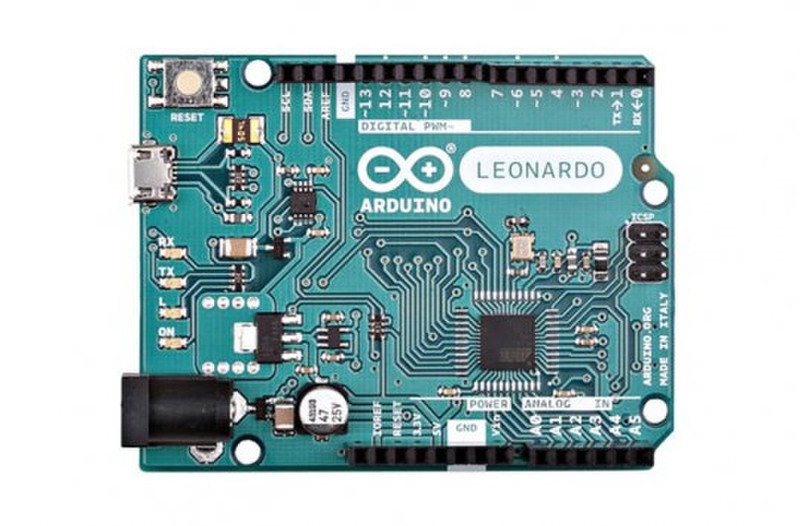
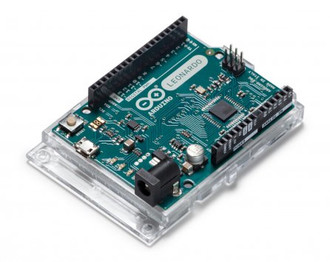
The Arduino Leonardo is a microcontroller board based on the ATmega32u4. It has 20 digital input/output pins (of which 7 can be used as PWM outputs and 12 as analog inputs), a 16 MHz crystal oscillator, a micro USB connection, a power jack, an ICSP header, and a reset button. It contains everything needed to support the microcontroller; simply connect it to a computer with a USB cable or power it with a AC-to-DC adapter or battery to get started.
The Leonardo differs from all preceding boards in that the ATmega32u4 has built-in USB communication, eliminating the need for a secondary processor. This allows the Leonardo to appear to a connected computer as a mouse and keyboard, in addition to a virtual (CDC) serial / COM port.