性能
| DirectX版本 |
10.1 |
| OpenGL版本 |
3.1 |
| HDCP |
Y |
| 集成电视调谐器 |
N |
| PhysX |
Y |
端口 & 界面
| 接口类型 |
PCI Express 2.0 |
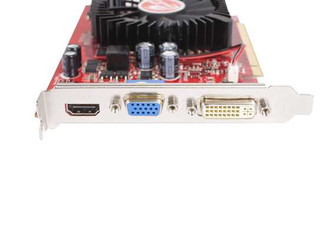
| HDMI端口数量 |
1 |
| DVI-I接口数量 |
1 |
| VGA(D-SUB)端口数量 |
1 |
内存参数
| 独立显卡适配器內存 |
1 GB |
| 数据宽度 |
128 bit |
| 内存时钟速度 |
700 MHz |
处理器
| 图形处理器系列 |
NVIDIA |
| 最大模拟分辨率 |
2048 x 1536 pixels |
| 处理器频率 |
506 MHz |
| 着色器时钟 |
1012 MHz |
| 流处理器 |
48 |
| 最大数字分辨率 |
2560 x 1600 pixels |
| CUDA |
Y |
另外
| 双dvi(互应式数字视频) |
Y |
| 图形处理器 |
GeForce GT 220 |
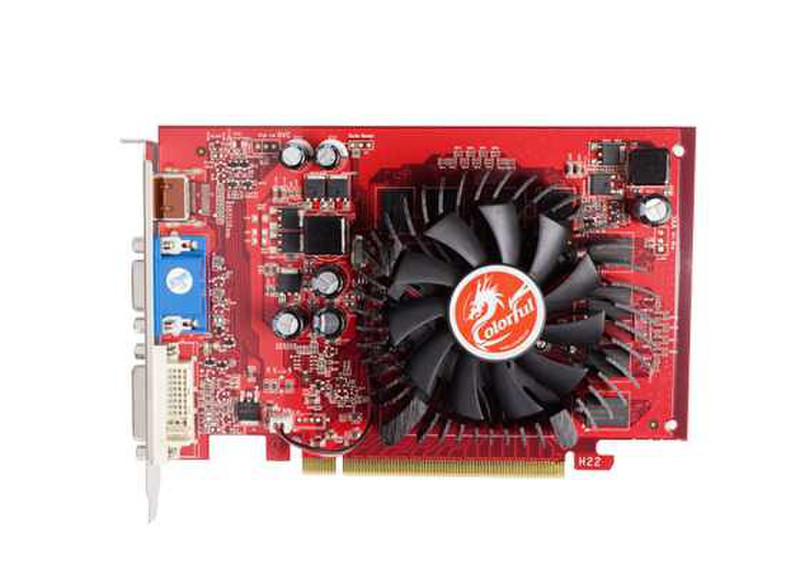
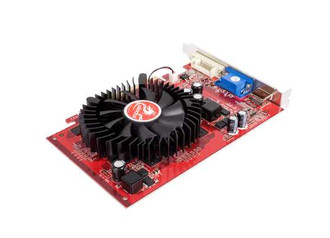
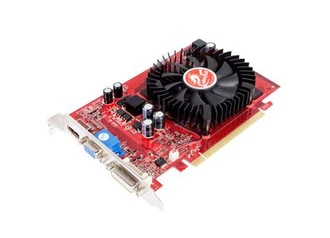
220-1024M D2 CV - 1024 MB, GDDR2, 128 bit, PCI Express 2.0
<b>1G</b>
Video memory is used to hold the information necessary for a graphics card to drive a display device. In modern 3D graphics cards, the video memory may also hold 3D vector data, textures, backbuffers, overlays and GPU programs.For high end graphics cards, 1G to 2G or even more video memory is necessary to delivers all its performance power. For mid-range cards, 512M to 1G is usually enough, while for the entry level cards 256M or less is generally enough for the card performance.
<b>HDMI</b>
HDMI (High-Definition Multimedia Interface) is an popular interface for audiovisual equipment such as high-definition television and home theater systems. With 19 wires wrapped in a single cable that resembles a USB wire, HDMI is able to carry a bandwidth of 5 Gbps (gigabits per second). This and several other factors make HDMI much more desirable than its predecessors, component video, S-Video and composite video.
<b>PCI-E 2.0</b>
PCI Express (Peripheral Component Interconnect Express), officially abbreviated as PCIe or PCI-E, is a computer expansion card standard designed to replace the older PCI, PCI-X, and AGP standards. PCI Express 2.0 specification was released in 2007 and doubled the rate of PCI-E 1.0 to a data rate of 500 MB/s and a transfer rate of 5.0 GT/s.