性能
| HDCP |
Y |
| Full HD |
Y |
| 集成电视调谐器 |
N |
| PhysX |
Y |
| DirectX版本 |
10.1 |
| OpenGL版本 |
3.1 |
| 最高着色模型版本 |
4.1 |
端口 & 界面
| VGA(D-SUB)端口数量 |
1 |
| 接口类型 |
PCI Express 2.0 |
| HDMI端口数量 |
1 |
处理器
| 处理器频率 |
506 MHz |
| 着色器时钟 |
1360 MHz |
| 流处理器 |
48 |
| 最大数字分辨率 |
2560 x 1600 pixels |
| CUDA |
Y |
| 图形处理器系列 |
NVIDIA |
| 最大模拟分辨率 |
2048 x 1536 pixels |
内存参数
| 内存时钟速度 |
1000 MHz |
| 独立显卡适配器內存 |
1 GB |
| 图形适配器内存类型 |
GDDR3 |
| 数据宽度 |
128 bit |
另外
| 双dvi(互应式数字视频) |
N |
| 图形处理器 |
GeForce GT 220 |
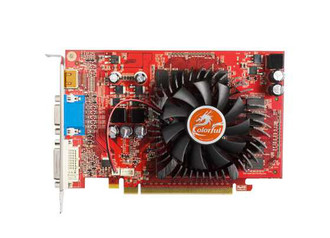
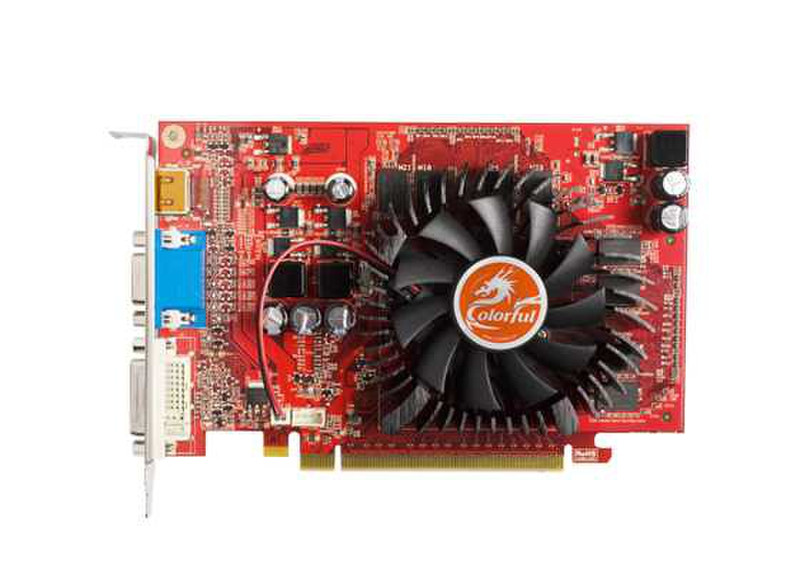
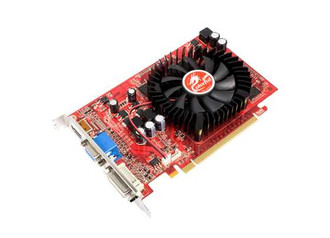
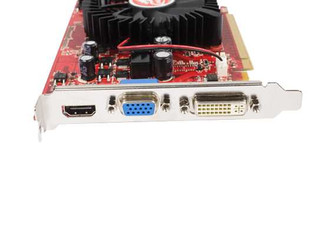
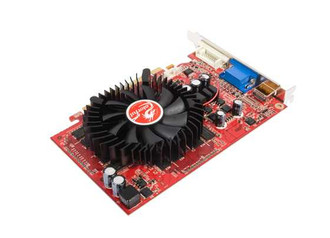
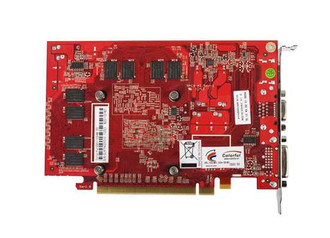
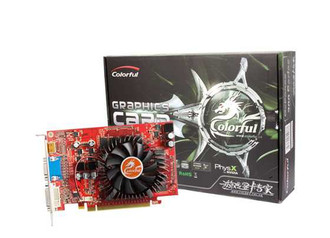
Colorful220-1024M D3 (N220-103-N01), 2560x1600, NVIDIA GeForce GT 220, 506 MHZ / 1360 MHz, 1024 MB GDDR 3 1000 MHz 128 bit, DirectX 10.1, OpenGL 3.1, HDMI + VGA + DVI
1.NVIDIA's new generation technique design and the first 40nm GPU for personal computers. Lower power consumption and lower thermal.
2.With 1024M DDR3 memory onboard, and native HDMI output port.
3.Supports NVIDIA® PureVideo® HD Technology, delivering unprecedented picture clarity, smooth video, accurate colors, and precise image scaling for movies and videos.
4.Full support of PCIE 2.0, twice than that of first generation of PCI Express.
5.NVIDIA CUDA™ Technology supported.
6.The Discrete, Programmable Video Processor in GPU provides superb picture quality and ultra-smooth movies with 100% offload of H.264 video decoding from the CPU and significantly reduces power consumption.
<b>CUDA</b>
NVIDIA® CUDA™ is a general purpose parallel computing architecture that leverages the parallel compute engine in NVIDIA graphics processing units (GPUs) to solve many complex computational problems in a fraction of the time required on a CPU. It includes the CUDA Instruction Set Architecture (ISA) and the parallel compute engine in the GPU.
<b>PhysX</b>
NVIDIA® PhysX® technology delivers real-time, hyper-realistic physical and environmental gaming effects in the games you want to play today and tomorrow. “Canned” reactions are a thing of the past – PhysX-powered games comes to life with blazing explosions, reactive debris, realistic water, and lifelike character motion.
<b>PureVideo</b>
NVIDIA PureVideo technology is the combination of a dedicated video processing core and software that delivers ultra-smooth, high-definition H.264, WMV, and MPEG-2 movies with minimal CPU utilization and low power consumption. And the high-precision subpixel processing enables videos to be scaled to any size.
<b>GDDR3</b>
GDDR3 (Graphics Double Data Rate 3) SGRAM is a graphics card-specific memory technology designed by ATI Technologies. It has much the same technological base as DDR2, but the power and heat dispersal requirements have been reduced somewhat, allowing for higher performance memory modules, and simplified cooling systems.
<b>1G</b>
Video memory is used to hold the information necessary for a graphics card to drive a display device. In modern 3D graphics cards, the video memory may also hold 3D vector data, textures, backbuffers, overlays and GPU programs.For high end graphics cards, 1G to 2G or even more video memory is necessary to delivers all its performance power. For mid-range cards, 512M to 1G is usually enough, while for the entry level cards 256M or less is generally enough for the card performance.
<b>HDMI</b>
HDMI (High-Definition Multimedia Interface) is an popular interface for audiovisual equipment such as high-definition television and home theater systems. With 19 wires wrapped in a single cable that resembles a USB wire, HDMI is able to carry a bandwidth of 5 Gbps (gigabits per second). This and several other factors make HDMI much more desirable than its predecessors, component video, S-Video and composite video.
<b>PCI-E 2.0</b>
PCI Express (Peripheral Component Interconnect Express), officially abbreviated as PCIe or PCI-E, is a computer expansion card standard designed to replace the older PCI, PCI-X, and AGP standards. PCI Express 2.0 specification was released in 2007 and doubled the rate of PCI-E 1.0 to a data rate of 500 MB/s and a transfer rate of 5.0 GT/s.
<b>DirectX 10.1</b>
Microsoft DirectX is a collection of application programming interfaces (APIs) for handling tasks related to multimedia, especially game programming and video, on Microsoft platforms. DirectX 10.1 is an incremental update of DirectX 10 which mainly sets a few more image quality standards for graphics vendors, while giving developers more control over image quality.
<b>OpenGL</b>
OpenGL (Open Graphics Library) is the computer industry's standard application program interface (API) for defining 2-D and 3-D graphic images.