联网
| 连网功能 |
Y |
| 可支持的网络协议(IPv4) |
TCP/IP: LPR, FTP, IPP, PORT2501, PORT9100 Microsoft Network: NetBIOS TCP/IP, NetBIOS NetBEUI; Netware, NDS Print Server, Bindery Print Server, Remote Printer; AppleTalk |
| 管理协议 |
TCP/IP: SNMP, HTTP, TELNET, DHCP, BOOTP, APIPA, PING, DDNS, Rendezvous (mDNS), SNTP, SSDP NetBEUI, NetWare and AppleTalk: SNMP, SLP |
输入容量
| 最大输入容量 |
1500 sheets |
| 标准输入能力 |
400 sheets |
| 多功能托盘容量 |
150 sheets |
打印速度
| 打印速度(黑色,一般质量,A4/US Letter) |
30 ppm |
| 首页时间(黑白,正常) |
8.2 s |
其他功能
| 功耗(活动) |
500 W |
| 标准纸张尺寸 |
- LT, HLT, EXE, LGL, GLG, GLT, F4, Monarch, Com#10, DL, C5, C6,ISO_B5;\n- 76.2 x 98.4 mm - 304.8 x 508 mm |
| 安全 |
UL60950(1999)3rd-Edition, EN60950/A3, IEC825/IEC60825-1 Class1 Laser Product, CE Directive, Nordic Agency Approvals, EN55024(1998) |
| Mac兼容性 |
Y |
| 网路功能 |
10/100 Base Tx |
纸张处理
| ISO B系列 尺寸(B0…B9) |
B4, B5 |
| ISO A 系列文件最大尺寸 |
A3 |
另外
| 最大内部存储 |
320 MB |
| 打印噪音水平 |
53 dB |
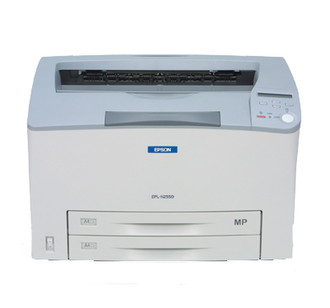
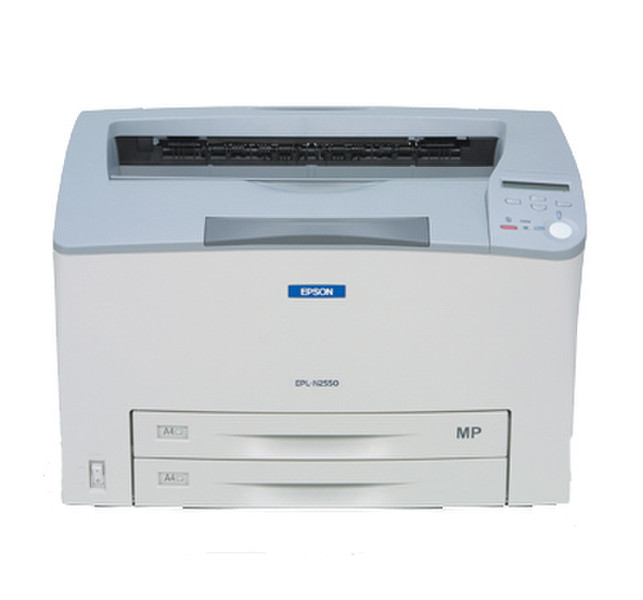
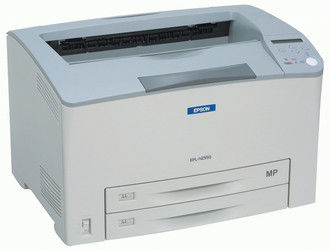
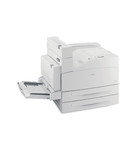
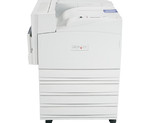
EPL-N2550 Laser / 30 ppm / IEEE 1284 parallel / USB 2.0 / Ethernet
Compact A3 mono laser printer for corporate workgroups
The Epson EPL-N2550 is the fast, reliable and easy to use printer that’s ideal for small workgroups
Fast reactions from ‘sleep’ mode saves time, but also means there’s no need to stay in ‘standby’, which saves money. It’s also easy to maintain and time-saving thanks to the large toner and paper capacities, and has the highest default memory in its class
Key features:
- High print speeds of up to 30 ppm, with Epson quick fuser technology fixing toner to paper fast.
- First page out time of just 8.2 seconds from ready,12 seconds from ‘sleep’ mode.
- Compact and quiet enough to fit into a small workspace.
- Handle large job sizes – with 64Mb of Epson’s Memory Improvement Technology.
- Epson1200RIT (Resolution Improvement Technology) gives sharper text and smoother greys.
- Supports Adobe® PostScript®3™, ESC/Page™, PCL6, ESC/P2™, IBM 1239X emulations.
- Ready to plug-in with Parallel, USB (2.0 compatible) and Network interfaces standard.
- Imaging Cartridge page yield of 15,000 page yield (17,000 according to ISO/IEC 19752).