Prozessor Besonderheiten
| Intel® Hyper-Threading-Technik (Intel® HT Technology) |
Y |
| Intel® Identity-Protection-Technologie (Intel® IPT) |
N |
| Intel® Anti-Theft Technologie (Intel® AT) |
N |
| Intel® Smart Cache |
N |
| Intel® Virtualisierungstechnik für direkte I/O (VT-d) |
N |
| Eingebettete Optionen verfügbar |
Y |
| Intel® On-Demand-Power-Redundancy-Technik |
N |
| Intel® Dual Display Capable Technology |
N |
| Intel® Smart-Response-Technologie |
N |
| Intel® Rapid-Start-Technologie |
N |
| Intel® Clear Video Technologie |
N |
| Intel® Demand Based Switching |
Y |
| Intel® OS Guard |
N |
| Intel® TSX-NI |
N |
| Verbesserte Intel SpeedStep Technologie |
Y |
| Intel® FDI-Technik |
N |
| Intel® VT-x mit Extended Page Tables (EPT) |
N |
| Intel® vPro™ -Technik |
N |
| Intel® Virtualisierungstechnik (Intel® VT) |
VT-x |
| Intel® Clear Video HD Technology für (Intel® CVT HD) |
N |
| Intel® Wireless-Display (Intel® WiDi) |
N |
| Intel® Matrix-Storage-Technik (Intel® MST) |
N |
| Intel® Unite unterstützt |
N |
| Intel® Sicherer Schlüssel |
N |
| Intel® Turbo-Boost-Technologie |
N |
| Intel® 64 |
N |
| Intel® Insider™ |
N |
| Intel® Advanced Management Technology |
N |
| Intel® Quick-Sync-Video-Technik |
N |
| Intel Stable Image Platform Program (SIPP) |
N |
| Intel® Small-Business-Advantage (Intel® SBA) |
N |
| Intel® Smart-Connect-Technik |
N |
| Intel® Trusted-Execution-Technik |
N |
| Thermal-Überwachungstechnologien |
Y |
| Leerlauf Zustände |
Y |
| Execute Disable Bit |
Y |
| Intel® Flex Memory Access |
N |
| Intel® Fast Memory Access |
N |
| Intel® Rapid-Storage-Technik |
N |
Prozessor
| Prozessor-Taktfrequenz |
1.6 GHz |
| Eingebauter Prozessor |
Y |
| Pufferspeicher L2 |
0.512 MB |
| Prozessor Lithografie |
45 nm |
| Anzahl Prozessorkerne |
1 |
| Thermal Design Power (TDP) |
2 W |
Zertifikate
| Sicherheit |
IP30 |
| Konformität mit Industriestandards |
RoHS |
Netzwerk
| WLAN |
Y |
| Netzwerkfunktionen |
Gigabit Ethernet |
| 4G WiMAX |
N |
Energie
| Netzteil Ausgangsspannung |
12 V |
| Stromversorgung |
18 W |
| AC-Adapter Outputstrom |
1.5 A |
| Netzteiltyp |
External AC adapter |
Speichermedien
| Integrierter Kartenleser |
Y |
| Unterstützte Speicherlaufwerke |
SSD |
| Anzahl der unterstützten Speicherlaufwerke |
1 |
Anschlüsse und Schnittstellen
| S/PDIF-Ausgang |
Y |
| Mikrofon-Eingang |
Y |
| CardBus PCMCIA Slot-Typ |
N |
| Serielle Anschlüsse |
1 |
| Anzahl HDMI Anschlüsse |
1 |
Speicher
| RAM-Speicher maximal |
2 GB |
| Arbeitsspeicher Typ |
SO-DIMM |
| Unterstützte Arbeitsspeicher |
DDR2-SDRAM |
Hauptplatine
| Anzahl unterstützter Prozessoren |
1 |
Zusätzlich
| Motherboard Chipsatz |
Intel US15W |
| Eingebauter Ethernet-Anschluss |
Y |
| Anzahl Ethernet-LAN-Anschlüsse (RJ-45) |
2 |
| Intel® AES New Instructions (Intel® AES-NI) |
N |
| InTru™-3D-Technik |
N |
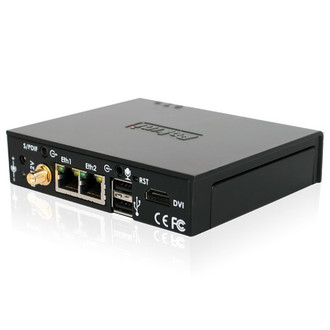
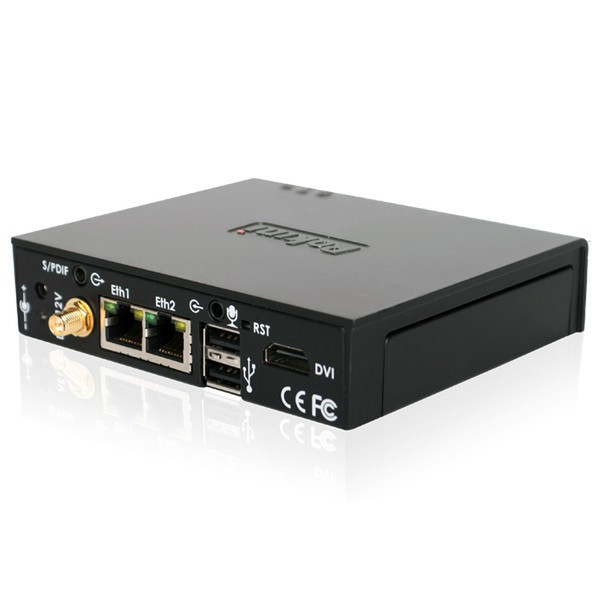
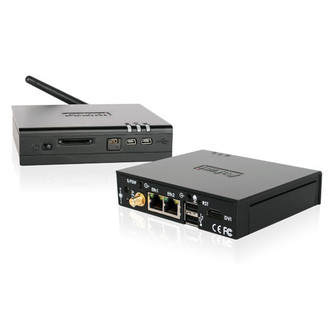
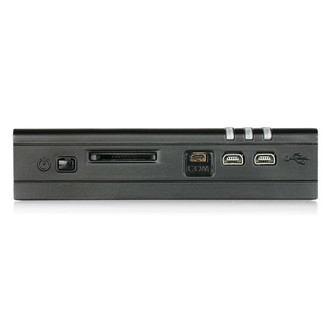
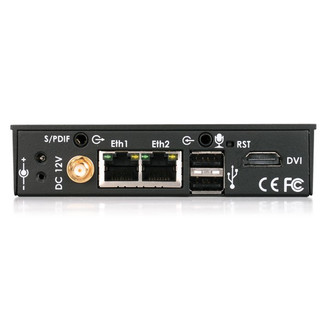
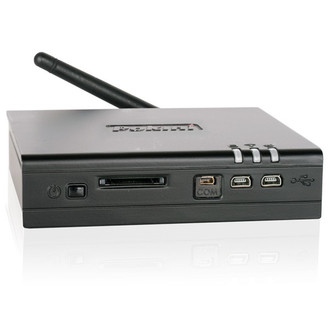
Intel Atom Z530 (1.60 GHz, 512K L2 Cache), 2 GB DDR2-SDRAM, 1 x 2.5" SSD Bay, WLAN, 2 x miniUSB 2.0, 2 x USB 2.0, 1 x HDMI, 2 x LAN, S/PDIF, 1 x seriell, miniSD-Kartenslot, IP30
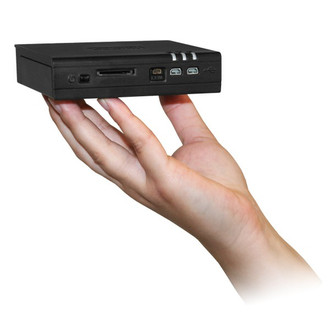
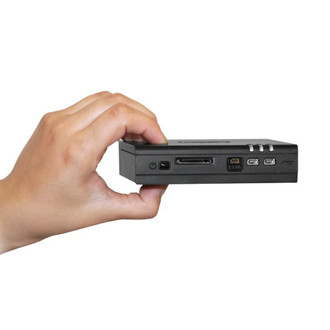
Der Pokini ist der kleinste lüfterlose Computer der Welt.
Der Winzling hat gerade mal ein Volumen von 0,3 Litern und dennoch können bis zu 2 GHz Taktrate an Leistung von dem verlöteten Intel Atom Prozessor abgerufen werden. Der 1 GB oder 2 GB Arbeitsspeicher sind ebenfalls mit dem Board fest verlötet. So können sich weder Speicher noch Prozessor lösen. Eine 2,5 Zoll SATA SSD kann integriert werden. Das Aluminium- Gehäuse ist komplett geschlossen und für den Dauerbetrieb geeignet. Die Verfügbarkeit des Pokini ist bis ins Jahr 2018 gewährleistet.