Prozessor
| Prozessor-Cache |
4 MB |
| Prozessor Lithografie |
65 nm |
| Prozessor Cache Typ |
L2 |
| Frontsidebus des Prozessors |
1066 MHz |
| Prozessorbetriebsmodi |
64-bit |
| Stepping |
C1 |
| Anzahl Prozessorkerne |
2 |
| Komponente für |
Server/Workstation |
| Prozessor-Taktfrequenz |
3.73 GHz |
Funktionen
| Execute Disable Bit |
Y |
| Thermal Design Power (TDP) |
130 W |
Prozessor Besonderheiten
| Intel® Virtualization Technologie (VT-X) |
Y |
| Intel® Hyper-Threading-Technik (Intel® HT Technology) |
Y |
| Verbesserte Intel SpeedStep Technologie |
Y |
Energie
| VID Spannungsbereich |
1.075 - 1.350 V |
Weitere Spezifikationen
| Intel® Virtualisierungstechnik (Intel® VT) |
VT-x |
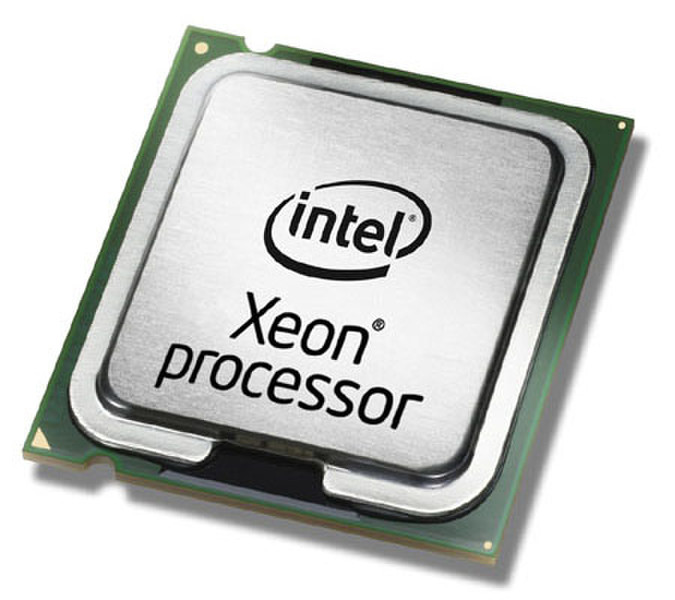
Intel Xeon 5080, 4Mb Cache, 3.73GHz, 1066MHz FSB
Intel® Hyper-Threading Technology (Intel® HT Technology) delivers two processing threads per physical core. Highly threaded applications can get more work done in parallel, completing tasks sooner.
Intel® Virtualization Technology (VT-x) allows one hardware platform to function as multiple “virtual” platforms. It offers improved manageability by limiting downtime and maintaining productivity by isolating computing activities into separate partitions.
Intel® 64 architecture delivers 64-bit computing on server, workstation, desktop and mobile platforms when combined with supporting software.¹ Intel 64 architecture improves performance by allowing systems to address more than 4 GB of both virtual and physical memory.
Enhanced Intel SpeedStep® Technology is an advanced means of enabling high performance while meeting the power-conservation needs of mobile systems. Conventional Intel SpeedStep® Technology switches both voltage and frequency in tandem between high and low levels in response to processor load. Enhanced Intel SpeedStep® Technology builds upon that architecture using design strategies such as Separation between Voltage and Frequency Changes, and Clock Partitioning and Recovery.
Execute Disable Bit is a hardware-based security feature that can reduce exposure to viruses and malicious-code attacks and prevent harmful software from executing and propagating on the server or network.