Prozessor
| Frontsidebus des Prozessors |
1066 MHz |
| Konfliktloser-Prozessor |
N |
| Prozessor Cache Typ |
L2 |
| Prozessor Codename |
Conroe |
| Physical Address Extension (PAE) |
32 bit |
| Thermal-Überwachungstechnologien |
Y |
| Execute Disable Bit |
Y |
| Thermal Design Power (TDP) |
65 W |
| Prozessor-Cache |
4 MB |
| Anzahl installierter Prozessoren |
1 |
| Anzahl Prozessorkerne |
2 |
| Max. number of SMP processors |
1 |
| CPU-Multiplikator (Bus-/Kernverhältnis) |
10 |
| Prozessor Lithografie |
65 nm |
| Prozessor-Paketgröße |
37.5 mm |
| Prozessor-Taktfrequenz |
2.66 GHz |
| Prozessorbetriebsmodi |
64-bit |
| Eingebettete Optionen verfügbar |
N |
| FSB Gleichwertigkeit |
N |
| Anzahl der Processing Die Transistoren |
291 M |
| Bus typ |
FSB |
| ECC vom Prozessor unterstützt |
N |
| Tcase |
60.1 °C |
Prozessor Besonderheiten
| Intel® Clear Video Technologie |
N |
| Intel® 64 |
Y |
| Intel® Insider™ |
N |
| Intel® Quick-Sync-Video-Technik |
N |
| ARK Prozessorerkennung |
27206 |
| Intel® Trusted-Execution-Technik |
N |
| Intel® Flex Memory Access |
N |
| Intel® Fast Memory Access |
N |
| Intel® Rapid-Storage-Technik |
N |
| Intel® Turbo-Boost-Technologie |
N |
| Intel® VT-x mit Extended Page Tables (EPT) |
N |
| Intel® vPro™ -Technik |
N |
| Intel® Clear Video Technology für Mobile Internet Devices (Intel® CVT for MID) |
N |
| Intel® My-WiFi-Technik (Intel® MWT) |
N |
| Intel® Enhanced Halt State |
Y |
| Intel® Hyper-Threading-Technik (Intel® HT Technology) |
N |
| Intel® Anti-Theft Technologie (Intel® AT) |
N |
| Intel® Virtualisierungstechnik für direkte I/O (VT-d) |
N |
| Intel® Dual Display Capable Technology |
N |
| Intel® Clear Video HD Technology für (Intel® CVT HD) |
N |
| Intel® Wireless-Display (Intel® WiDi) |
N |
| Intel® Demand Based Switching |
N |
| Verbesserte Intel SpeedStep Technologie |
Y |
| Intel® FDI-Technik |
N |
Speicher
| ECC |
Y |
| RAM-Speicher |
1 GB |
| Interner Speichertyp |
DDR2-SDRAM |
| RAM-Speicher maximal |
8 GB |
| Speichersteckplätze |
4 DIMM |
Grafik
| Maximaler Grafikkartenspeicher |
16 MB |
Weitere Spezifikationen
| Festplattencontroller |
SATA/SAS |
Anschlüsse und Schnittstellen
| Serielle Anschlüsse |
1 |
| Anzahl PS/2 Anschlüsse |
2 |
| Anzahl VGA (D-Sub) Anschlüsse |
1 |
Design
| Optisches Laufwerk - Typ |
DVD-ROM |
| Gehäusetyp |
Rack (1U) |
Speichermedien
| Gesamtspeicherkapazität |
1500 GB |
Netzwerk
| Netzwerkfunktionen |
Gigabit Ethernet |
Zusätzlich
| InTru™-3D-Technik |
N |
| Grafikkarte |
RN50 |
| Processing die Größe |
143 mm² |
| Intel® AES New Instructions (Intel® AES-NI) |
N |
| Anzahl Ethernet-LAN-Anschlüsse (RJ-45) |
2 |
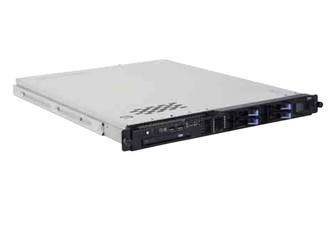
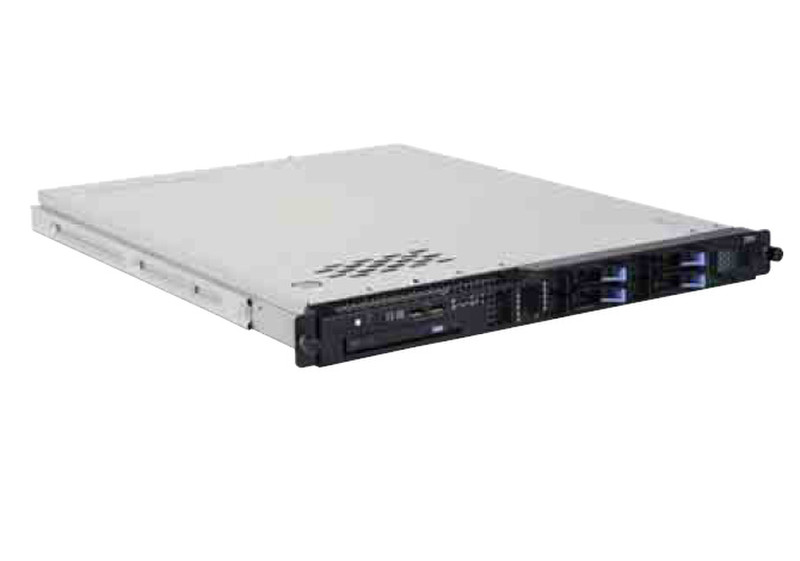
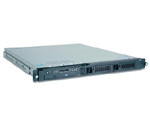
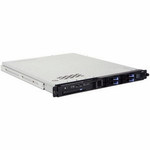
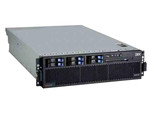
System x3250, Dual-Core Xeon 3070 2.66 GHz /1066 MHz (2x 2 MB L2 cache), 2 x 512 MB PC2-5300 CL5 ECC DDR2 SDRAM DIMM, 0x 0 GB SAS/SATA HD (open bay), CD-RW/DVD-ROM, 2 x 1 Gb Ethernet, ATI RN50 16MB
Der IBM System x3250 ist ein Single-Socket Server, der einfach zu implementieren, zu verwalten und zu warten ist. Er bietet außergewöhnliche Leistung und Zuverlässigkeit zum günstigen Einstiegspreis.
Vereinfachtes Computing
Der x3250 bietet Remote-Überwachungs- und Warnfunktionen für leistungsfähiges Systemmanagement. Und außerdem:
- Simple-Swap- und Hot-Swap-Festplatten ermöglichen eine problemlose Wartung, ohne dass das System aus dem Rack genommen werden muss
- Optionales Upgrade auf die Remote Supervisor Adapter II SlimLine für Remote-Verwaltung, auch wenn der Server heruntergefahren ist
- Integriertes Hardware-RAID-0 oder -RAID-1 ohne Nutzung eines Steckplatzes (ausgewählte Modelle)
- Rack-optimierter 22-Zoll-Formfaktor mit Unterstützung von maximal vier 2,5 Zoll Serial Attached SCSI (SAS) Festplatten.
Leistung und Sicherheit zum günstigen Einstiegspreis
Ausgelegt für Dual-Core 64-Bit-Hochleistungsprozessoren kann der x3250 die Leistung Ihrer Web- und Netzwerkinfrastruktur optimieren. Wählen Sie für erhöhte Performanceanforderungen Modelle mit Intel® Xeon®- oder Intel Pentium® D-Prozessoren. Diejenigen, die weniger anspruchsvolle Anwendungen nutzen, bevorzugen möglicherweise den Intel Celeron®-Prozessor.
SAS-Festplatten und PCI-Express gewährleisten noch höhere integrierte Input/Output (I/O)-Leistung und Kompatibilität mit Geräten der nächsten Generation zum langfristigen Schutz der Investitionen.