Prozessor
| Prozessor-Taktfrequenz |
3.33 GHz |
| Stepping |
E0 |
| Prozessorsystemtyp |
DP |
| Prozessorbetriebsmodi |
64-bit |
| Eingebettete Optionen verfügbar |
N |
| FSB Gleichwertigkeit |
Y |
| Anzahl der Processing Die Transistoren |
820 M |
| Frontsidebus des Prozessors |
1333 MHz |
| Konfliktloser-Prozessor |
N |
| Prozessor Cache Typ |
L2 |
| Prozessor-Code |
SLBBF |
| Thermal-Überwachungstechnologien |
Y |
| Leerlauf Zustände |
Y |
| Execute Disable Bit |
Y |
| Prozessor-Cache |
12 MB |
| Anzahl installierter Prozessoren |
1 |
| Anzahl Prozessorkerne |
4 |
| Max. number of SMP processors |
2 |
| Thermal Design Power (TDP) |
120 W |
| CPU-Multiplikator (Bus-/Kernverhältnis) |
10 |
| Prozessor Lithografie |
45 nm |
| Bus typ |
FSB |
| ECC vom Prozessor unterstützt |
N |
| Tcase |
63 °C |
Prozessor Besonderheiten
| Intel® Clear Video Technology für Mobile Internet Devices (Intel® CVT for MID) |
N |
| Intel® My-WiFi-Technik (Intel® MWT) |
N |
| Intel® Enhanced Halt State |
Y |
| Intel® Hyper-Threading-Technik (Intel® HT Technology) |
N |
| Intel® Anti-Theft Technologie (Intel® AT) |
N |
| Intel® Virtualisierungstechnik für direkte I/O (VT-d) |
N |
| Intel® Dual Display Capable Technology |
N |
| Intel® Clear Video Technologie |
N |
| Intel® 64 |
Y |
| Intel® Insider™ |
N |
| Intel® Quick-Sync-Video-Technik |
N |
| ARK Prozessorerkennung |
35430 |
| Intel® Virtualization Technologie (VT-X) |
Y |
| Intel® Trusted-Execution-Technik |
N |
| Intel® Flex Memory Access |
N |
| Intel® Fast Memory Access |
N |
| Intel® Rapid-Storage-Technik |
N |
| Intel® Turbo-Boost-Technologie |
N |
| Intel® Clear Video HD Technology für (Intel® CVT HD) |
N |
| Intel® Wireless-Display (Intel® WiDi) |
N |
| Intel® Demand Based Switching |
Y |
| Verbesserte Intel SpeedStep Technologie |
Y |
| Intel® FDI-Technik |
N |
| Intel® VT-x mit Extended Page Tables (EPT) |
Y |
| Intel® vPro™ -Technik |
N |
Speicher
| RAM-Speicher maximal |
48 GB |
| Speichersteckplätze |
12x DIMM |
| Speichertaktfrequenz |
667 MHz |
| ECC |
Y |
| RAM-Speicher |
2 GB |
| Interner Speichertyp |
DDR2-SDRAM |
Speichermedien
| Hot-Swap |
Y |
| Festplatten-Formfaktor |
2.5 " |
| Festplatten-Schnittstelle |
Serial Attached SCSI (SAS) |
Grafik
| Maximaler Grafikkartenspeicher |
16 MB |
Design
| Gehäusetyp |
Rack (2U) |
| Optisches Laufwerk - Typ |
DVD-ROM |
Anschlüsse und Schnittstellen
| Serielle Anschlüsse |
1 |
| Anzahl VGA (D-Sub) Anschlüsse |
2 |
Netzwerk
| Netzwerkfunktionen |
Gigabit Ethernet |
Zusätzlich
| Grafikkarte |
RN50 |
| Processing die Größe |
214 mm² |
| InTru™-3D-Technik |
N |
| Anzahl Ethernet-LAN-Anschlüsse (RJ-45) |
2 |
| Intel® AES New Instructions (Intel® AES-NI) |
N |
1x Quad-Core Intel Xeon X5470 3.33GHz / 1333MHz FSB 120W (12MB L2), 2 x 1GB 667 MHz DDR2 AMF PC2-5300 SDRAM ECC DIMM Memory, 0x 0GB 2.5" SAS hot-swap HD (open bay), 1x CD-R/CD-RW DVD Combo (8x-24x), 2x Broadcom Gigabit Ethernet (10/100/1000 Mbps), ATI RN50 (16MB), 1x 835W
Neues Geschwindigkeits- und Performanceniveau
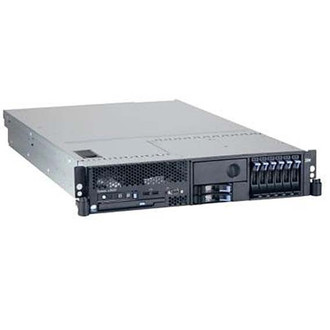
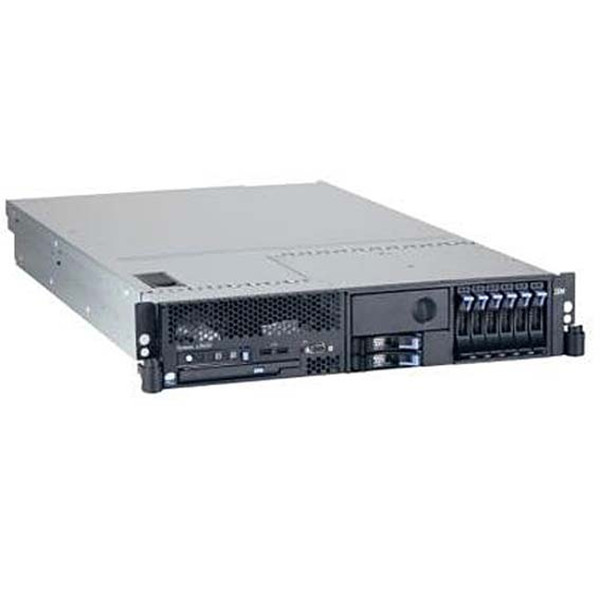
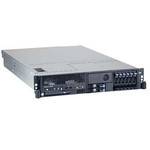
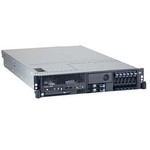
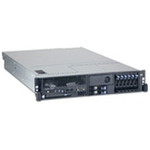
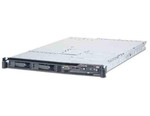
Der IBM System x3650 Server bietet Leistung und Zuverlässigkeit in platzbegrenzten Rechenzentren. Für den Einsatz von bis zu acht Prozessor-Cores optimiert, verfügt der x3650 über eine kompakte Dual-Core- oder Quad-Core-Rechenleistung, ein beeindruckendes Speicherdesign mit 12 DIMM-Steckplätzen und eine extrem effiziente Netzwerkkommunikation.
Schutz Ihrer IT-Investitionen
Das skalierbare Speicher- und I/O-Design ermöglicht ein Hochgeschwindigkeitsrechnen und erfüllt alle Anforderungen an die Zuverlässigkeit. Gleichzeitig gewährleistet der Einsatz von RAID-Technologie den Schutz Ihrer Daten. Die austauschbare (Hot-Swap) Stromversorgung und Kühltechnik mit Calibrated Vectored Cooling (CVC) und IBM PowerExecutive garantieren eine niedrige Betriebstemperatur Ihres Servers. Das Ergebnis? Sie sind in der Lage, mehrere Workloads auf einem Server mit zwei Steckplätzen zu bearbeiten – und das, ohne Ihr IT-Budget zu sehr zu strapazieren.