Speicher
| Speichertaktfrequenz |
800 MHz |
| Speicherlayout |
1 x 2 GB |
| Speichersteckplätze |
2x DIMM |
| RAM-Speicher maximal |
4 GB |
| RAM-Speicher |
2 GB |
| Interner Speichertyp |
DDR2-SDRAM |
Prozessor Besonderheiten
| Intel® Quick-Sync-Video-Technik |
N |
| Intel® Insider™ |
N |
| Intel® Clear Video Technologie |
N |
| Intel® Dual Display Capable Technology |
N |
| Eingebettete Optionen verfügbar |
Y |
| Intel® Virtualisierungstechnik für direkte I/O (VT-d) |
Y |
| Intel® Anti-Theft Technologie (Intel® AT) |
N |
| Intel® Hyper-Threading-Technik (Intel® HT Technology) |
N |
| Intel® Turbo-Boost-Technologie |
N |
| Intel® Enhanced Halt State |
Y |
| Intel® My-WiFi-Technik (Intel® MWT) |
N |
| Intel® Clear Video Technology für Mobile Internet Devices (Intel® CVT for MID) |
N |
| Intel® Demand Based Switching |
N |
| Intel® Wireless-Display (Intel® WiDi) |
N |
| Intel® Clear Video HD Technology für (Intel® CVT HD) |
N |
| Intel® Rapid-Storage-Technik |
N |
| Graphics & IMC lithography |
45 nm |
| Intel® Fast Memory Access |
N |
| Intel® Flex Memory Access |
N |
| Execute Disable Bit |
Y |
| Leerlauf Zustände |
Y |
| Thermal-Überwachungstechnologien |
Y |
| Intel® Trusted-Execution-Technik |
Y |
| Intel® Virtualization Technologie (VT-X) |
Y |
| Prozessor-Paketgröße |
37.5 mm |
| ARK Prozessorerkennung |
33910 |
| Prozessor-Code |
SLB9J |
| Intel® 64 |
Y |
| Intel® vPro™ -Technik |
N |
| Intel® VT-x mit Extended Page Tables (EPT) |
N |
| Intel® FDI-Technik |
N |
| Verbesserte Intel SpeedStep Technologie |
Y |
Prozessor
| Konfliktloser-Prozessor |
N |
| FSB Gleichwertigkeit |
N |
| CPU-Multiplikator (Bus-/Kernverhältnis) |
9 |
| Prozessorbetriebsmodi |
64-bit |
| Stepping |
E0 |
| Anzahl Prozessorkerne |
2 |
| Prozessor-Taktfrequenz |
3 GHz |
| Bus typ |
FSB |
| Frontsidebus des Prozessors |
1333 MHz |
| Prozessor Cache Typ |
L2 |
| Anzahl der Processing Die Transistoren |
410 M |
| Prozessor-Cache |
6 MB |
| Prozessor Lithografie |
45 nm |
| Thermal Design Power (TDP) |
65 W |
| Prozessor Codename |
Wolfdale |
| Tcase |
72.4 °C |
| ECC vom Prozessor unterstützt |
N |
Grafik
| Dediziertes Grafikmodell |
Intel GMA 4500M |
| Eingebaute Grafikadapter |
Y |
Speichermedien
| Festplatten-Drehzahl |
7200 RPM |
| Gesamtspeicherkapazität |
320 GB |
| Integrierter Kartenleser |
N |
| Festplatten-Schnittstelle |
Serial ATA |
Leistung
| Audio-System |
Realtek ALC662 |
Optisches Laufwerk
| Optisches Laufwerk - Typ |
DVD±RW |
Energie
| Stromversorgung - Eingang Spannung |
110 - 220 V V |
| Stromversorgung - Eingang Frequenz |
50 - 60 Hz |
| Stromversorgung |
280 W |
Anschlüsse und Schnittstellen
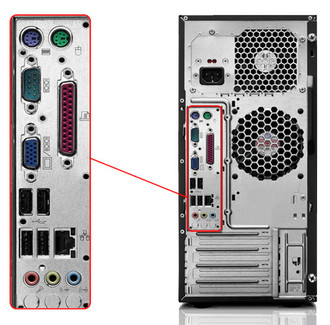
| Anzahl PS/2 Anschlüsse |
2 |
| Kopfhörerausgänge |
1 |
| Mikrofon-Eingang |
Y |
| Anzahl VGA (D-Sub) Anschlüsse |
1 |
| Serielle Anschlüsse |
1 |
| Parallel Port |
1 |
Weitere Spezifikationen
| Netzwerkfunktionen |
Gigabit Ethernet |
Zusätzlich
| InTru™-3D-Technik |
N |
| Intel® AES New Instructions (Intel® AES-NI) |
N |
| Anzahl Ethernet-LAN-Anschlüsse (RJ-45) |
1 |
| Processing die Größe |
107 mm² |
Intel Core 2 Duo E8400, 2GB, 320GB 7200RPM S-ATA HDD, no FDD, PCI/PCIe Tower (4x5), DVI-D adapter, DVD-RW, Gigabit Ethernet, Windows Vista Business / downgrade Windows XP Professional
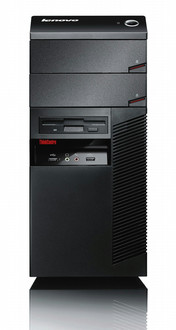
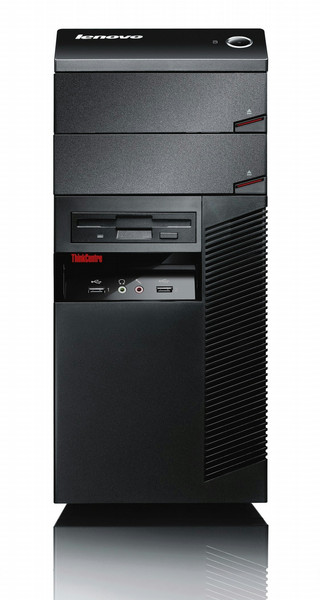
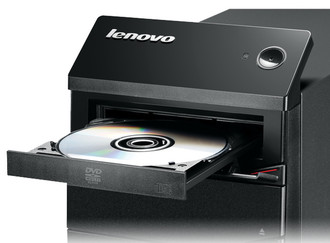
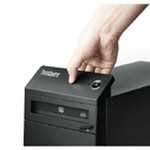
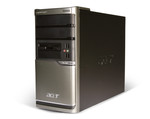
Der A58 Tower ist so kompakt, dass er sowohl auf als auch unter Ihrem Schreibtisch Platz findet. Sein ergonomisches Design mit einem Handgriff oben am Gehäuse und einer nach oben abgeschrägten Gehäusfront erleichtern die Handhabung und das Ein- und Ausschalten des Geräts vom Bürostuhl aus. Ebenfalls leicht zugänglich an der Gehäusevorderseite angebracht sind die (durch Schiebetüren geschützten) optischen Laufwerke, die USB-Anschlüsse sowie ein Audio-Ein- und -Ausgang.