Prozessor Besonderheiten
| Intel® Trusted-Execution-Technik |
N |
| Physical Address Extension (PAE) |
36 bit |
| Intel® Virtualization Technologie (VT-X) |
Y |
| Prozessor-Paketgröße |
42.5 x 45 mm |
| ARK Prozessorerkennung |
40800 |
| Physical Address Extension (PAE) |
Y |
| Intel® 64 |
Y |
| Eingebettete Optionen verfügbar |
N |
| Intel® Hyper-Threading-Technik (Intel® HT Technology) |
N |
| Intel® Turbo-Boost-Technologie |
N |
| Intel® VT-x mit Extended Page Tables (EPT) |
Y |
| Verbesserte Intel SpeedStep Technologie |
Y |
| Intel® Demand Based Switching |
Y |
| Execute Disable Bit |
Y |
| Leerlauf Zustände |
Y |
| Thermal-Überwachungstechnologien |
N |
| Unterstützte Befehlssätze |
SSE4.2 |
Prozessor
| Thermal Design Power (TDP) |
130 W |
| Speichertaktraten, vom Prozessor unterstützt |
1066, 800 MHz |
| Speicherkanäle, vom Prozessor unterstützt |
Triple |
| Prozessorbetriebsmodi |
64-bit |
| Durch den Prozessor (max) unterstützte Speicherbandbreite |
25.6 GB/s |
| ECC vom Prozessor unterstützt |
Y |
| Maximaler interner Speicher, vom Prozessor unterstützt |
24 GB |
| Prozessor Cache Typ |
Smart Cache |
| PCI-Express-Slots-Version |
2.0 |
| Anzahl installierter Prozessoren |
1 |
| Anzahl der QPI links |
1 |
| Prozessor-Cache |
4 MB |
| Prozessor Lithografie |
45 nm |
| Anzahl Prozessorkerne |
2 |
| Prozessor-Taktfrequenz |
2.4 GHz |
| Speichertypen, vom Prozessor unterstützt |
DDR3-SDRAM |
| Bus typ |
QPI |
Software
| Betriebssystem Architektur |
64-bit |
Erweiterungssteckplätze
| PCI-Slots |
1 |
| PCI-Express x1-Slots |
1 |
| PCI-Express x4-Slots |
1 |
| PCI-Express x16-Slots |
2 |
Design
| Anzahl der 3,5" Erweiterungseinschübe |
4 |
| Anzahl der 5,25" Erweiterungseinschübe |
2 |
| Gehäusetyp |
Tower |
Speicher
| Speicherlayout |
3 x 2 GB |
| Speichersteckplätze |
6x DIMM |
| Interner Speichertyp |
DDR3-SDRAM |
| Speichertaktfrequenz |
1066 MHz |
| RAM-Speicher maximal |
12 GB |
| RAM-Speicher |
6 GB |
Weitere Spezifikationen
| Prozessorhersteller |
Intel |
| Konformität mit Industriestandards |
IEEE 802.3, IEEE 802.3u, IEEE 802.3ab |
| Netzwerkfunktionen |
Gigabit Ethernet (10/100/1000) |
Speichermedien
| Festplattenkapazität |
500 GB |
| Festplatten-Drehzahl |
7200 RPM |
| Festplatten-Schnittstelle |
Serial ATA |
| Anzahl der installierten Festplatten |
1 |
Optisches Laufwerk
| Optisches Laufwerk - Typ |
DVD-RW |
Energie
| Stromversorgung - Eingang Spannung |
100 - 240 V |
| Stromversorgung - Eingang Frequenz |
50 - 60 Hz |
| Stromversorgung |
625 W |
Anschlüsse und Schnittstellen
| Serielle Anschlüsse |
1 |
| Kopfhörerausgänge |
1 |
| Mikrofon-Eingang |
Y |
| Anzahl eSATA Anschlüsse |
1 |
Zusätzlich
| Motherboard Chipsatz |
Intel X58 Express |
| Intel® AES New Instructions (Intel® AES-NI) |
N |
| System-Bus |
4.8 GT/s |
| Anzahl Ethernet-LAN-Anschlüsse (RJ-45) |
1 |
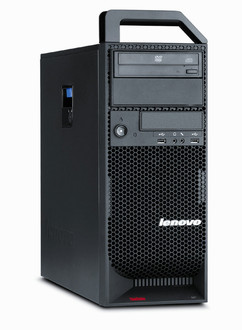
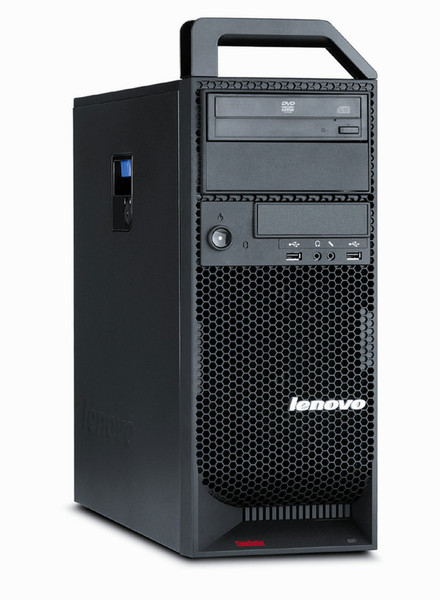
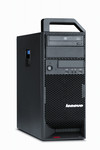
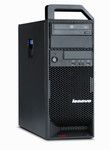
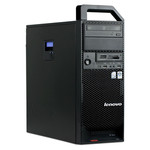
Lenovo S20, ThinkStation. Prozessor-Taktfrequenz: 2,4 GHz, Prozessorfamilie: Intel® Xeon® 3000er-Prozessoren, Prozessor: W3503. RAM-Speicher: 6 GB, Interner Speichertyp: DDR3-SDRAM, RAM-Speicher maximal: 12 GB. Festplattenkapazität: 500 GB, Festplatten-Schnittstelle: SATA, Festplatten-Drehzahl: 7200 RPM. Optisches Laufwerk - Typ: DVD-RW. Vorinstalliertes Betriebssystem: Windows 7 Professional, Betriebssystem Architektur: 64-Bit