Prozessor
| Prozessorbetriebsmodi |
64-bit |
| Eingebettete Optionen verfügbar |
N |
| FSB Gleichwertigkeit |
Y |
| Anzahl der Processing Die Transistoren |
820 M |
| Frontsidebus des Prozessors |
1333 MHz |
| Konfliktloser-Prozessor |
N |
| Prozessor Cache Typ |
L2 |
| Prozessor-Code |
SLANV |
| CPU-Multiplikator (Bus-/Kernverhältnis) |
7.5 |
| Thermal-Überwachungstechnologien |
Y |
| Execute Disable Bit |
Y |
| Prozessor-Cache |
12 MB |
| Anzahl installierter Prozessoren |
1 |
| Anzahl Prozessorkerne |
4 |
| Max. number of SMP processors |
2 |
| Thermal Design Power (TDP) |
80 W |
| Prozessor Lithografie |
45 nm |
| Prozessor-Paketgröße |
37.5 mm |
| Stepping |
C0 |
| Prozessorsystemtyp |
DP |
| Bus typ |
FSB |
| ECC vom Prozessor unterstützt |
N |
| Tcase |
67 °C |
| Prozessor-Taktfrequenz |
2.5 GHz |
Prozessor Besonderheiten
| Intel® Hyper-Threading-Technik (Intel® HT Technology) |
N |
| Intel® Anti-Theft Technologie (Intel® AT) |
N |
| Intel® Virtualisierungstechnik für direkte I/O (VT-d) |
N |
| Intel® Dual Display Capable Technology |
N |
| Intel® Clear Video Technologie |
N |
| Intel® 64 |
Y |
| Intel® Insider™ |
N |
| Intel® Quick-Sync-Video-Technik |
N |
| ARK Prozessorerkennung |
33927 |
| Intel® Turbo-Boost-Technologie |
N |
| Intel® Trusted-Execution-Technik |
N |
| Intel® Flex Memory Access |
N |
| Intel® Fast Memory Access |
N |
| Intel® Rapid-Storage-Technik |
N |
| Intel® Clear Video Technology für Mobile Internet Devices (Intel® CVT for MID) |
N |
| Intel® My-WiFi-Technik (Intel® MWT) |
N |
| Intel® Enhanced Halt State |
Y |
| Intel® Clear Video HD Technology für (Intel® CVT HD) |
N |
| Intel® Wireless-Display (Intel® WiDi) |
N |
| Intel® Demand Based Switching |
Y |
| Verbesserte Intel SpeedStep Technologie |
Y |
| Intel® FDI-Technik |
N |
| Intel® VT-x mit Extended Page Tables (EPT) |
N |
| Intel® vPro™ -Technik |
N |
Speicher
| ECC |
Y |
| RAM-Speicher |
1 GB |
| Interner Speichertyp |
DDR2-SDRAM |
| RAM-Speicher maximal |
48 GB |
| Speichersteckplätze |
12x DIMM |
Grafik
| Maximaler Grafikkartenspeicher |
16 MB |
Anschlüsse und Schnittstellen
| Parallel Port |
1 |
| Serielle Anschlüsse |
2 |
| Anzahl PS/2 Anschlüsse |
2 |
| Anzahl VGA (D-Sub) Anschlüsse |
1 |
Weitere Spezifikationen
| Festplattencontroller |
ServeRAID 8k SAS |
Design
| Gehäusetyp |
Tower (5U) |
| Optisches Laufwerk - Typ |
DVD-ROM |
Speichermedien
| Gesamtspeicherkapazität |
1750 GB |
Netzwerk
| Netzwerkfunktionen |
Gigabit Ethernet |
Zusätzlich
| Processing die Größe |
214 mm² |
| InTru™-3D-Technik |
N |
| Anzahl Ethernet-LAN-Anschlüsse (RJ-45) |
3 |
| Intel® AES New Instructions (Intel® AES-NI) |
N |
| Grafikkarte |
ES1000 |
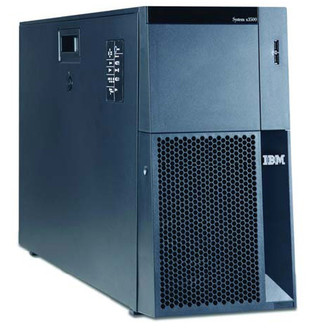
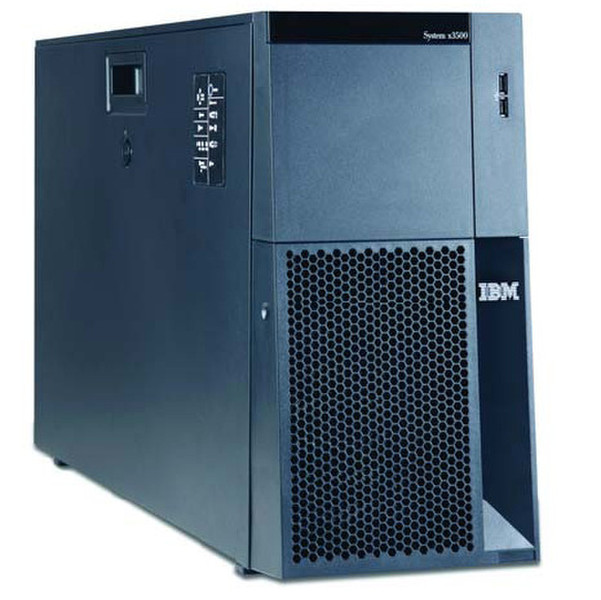
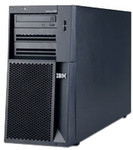
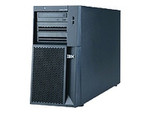
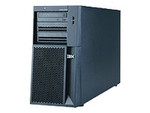
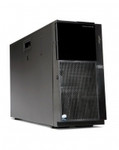
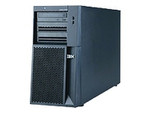
System x3500, 1x Quad-core Xeon E5420 2.5 GHz (12 MB L2 cache), 2x 512 MB PC2-5300 CL5 ECC DDR2 Chipkill FBDIMM, 0x HD (open bay), 1x DVD-ROM (IDE), Gigabit Ethernet, ATI ES1000 (16 MB), 1x 835 W
- Exzellentes Preis-/Leistungsverhältnis mit einem branchenführenden Server mit zwei Dual-Core Prozessoren
- Die langlebige Plattform optimiert IT-Investitionen
- Verwaltung und Schutz geschäftskritischer Anwendungen durch skalierbaren Speicher, Eingabe-/Ausgabe- (E/A) und Speicherkapazität.
Optimiert für Ihr Business
Der IBM System x3500 liefert ungekannte Leistung und Zuverlässigkeit für anspruchsvolle verteilte Umgebungen, für deren geschäftskritische Anwendungen eine Verfügbarkeit rund um die Uhr erforderlich ist. Bei einer 4-Core-Prozessorleistung und geringeren Stromkosten pro Core liefert der x3500 erstklassige Kapazität und schnelle E/A-Skalierbarkeit. Als langlebige Plattform mit einer angekündigten Verfügbarkeit von 24 Monaten verringert der x3500 mögliche Bedenken hinsichtlich Betrieb und Support auf ein Minimum.