Ports & interfaces
| Number of digital I/O pins |
20 |
| PWM digital I/O pins |
7 |
| Number of analog I/O pins |
12 |
| Wi-Fi |
N |
| USB ports quantity |
1 |
Processor
| Microcontroller model |
ATMega32u4 |
| Microcontroller frequency |
16 MHz |
Features
| Input voltage (max) |
6 - 20 V |
| DC current per I/O pin |
40 mA |
| Form factor |
Arduino |
| Operating voltage |
5 V |
Memory
| SRAM (Static Random Access Memory) |
2.5 KB |
| EEPROM (Electrically Erasable Programmable Read-Only Memory) |
1 KB |
| Flash memory |
0.032 MB |
Weight & dimensions
| Board dimensions |
53.3 x 68.6 mm |
Additionally
| Ethernet LAN connection |
N |
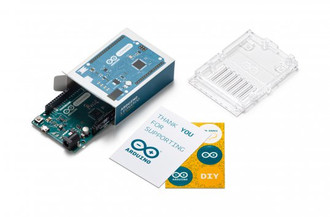
Leonardo with Headers, ATmega32u4, 16MHz, 20 Digital I/O Pins, 7 PWM Digital I/O Pins, 12 Analog Input Pins, 53.3 x 68.6 mm, 20 g
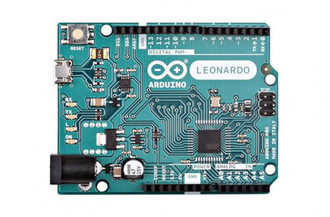
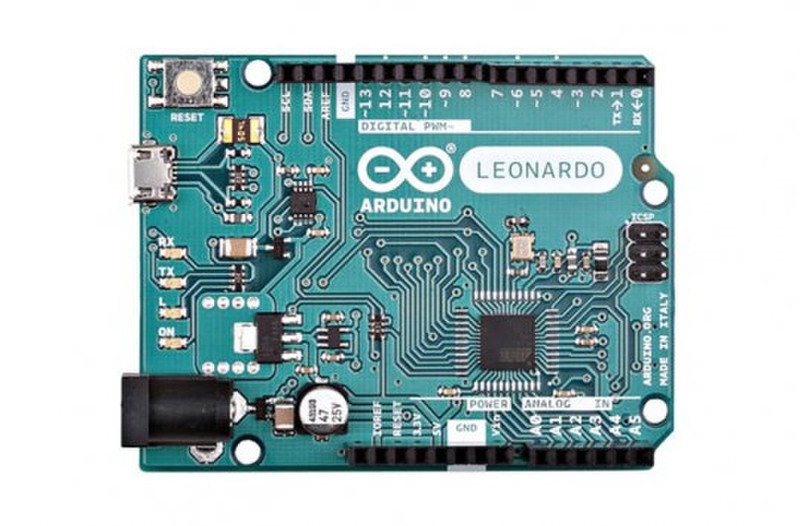
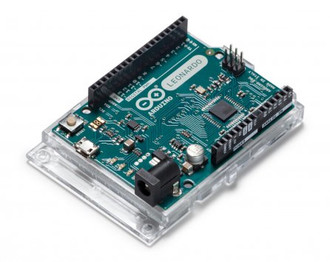
The Arduino Leonardo is a microcontroller board based on the ATmega32u4. It has 20 digital input/output pins (of which 7 can be used as PWM outputs and 12 as analog inputs), a 16 MHz crystal oscillator, a micro USB connection, a power jack, an ICSP header, and a reset button. It contains everything needed to support the microcontroller; simply connect it to a computer with a USB cable or power it with a AC-to-DC adapter or battery to get started.
The Leonardo differs from all preceding boards in that the ATmega32u4 has built-in USB communication, eliminating the need for a secondary processor. This allows the Leonardo to appear to a connected computer as a mouse and keyboard, in addition to a virtual (CDC) serial / COM port.