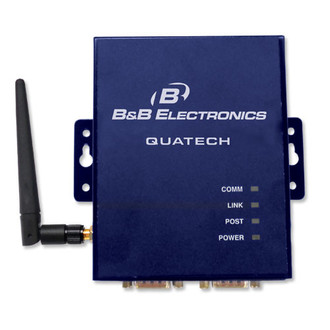
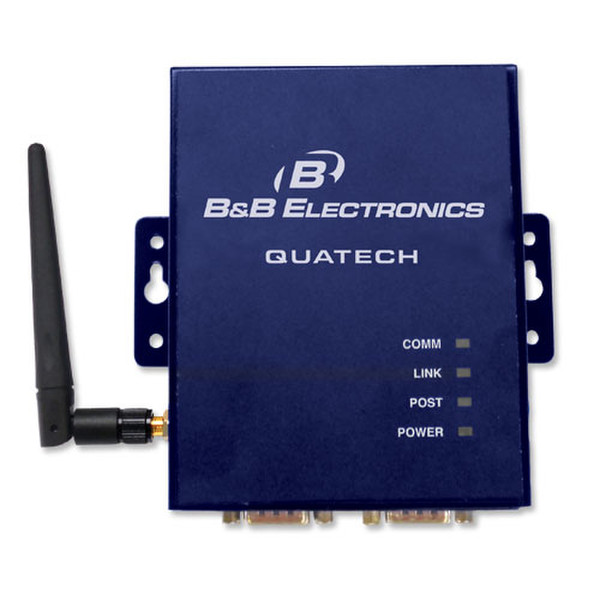
Design
| Internal |
N |
| Housing material |
Metal |
| Placement |
Table, Wall |
| LED indicators |
Y |
Performance
| Receiver sensitivity |
802.11 b/g\n54Mb/s = -72 dBm\n36Mb/s = -78 dBm\n18Mb/s = -84 dBm\n6Mb/s = -89 dBm\n11Mb/s = -86 dBm\n1Mb/s = -92 dBm\n\n802.11 a\n54Mb/s = -74 dBm\n36Mb/s = -80 dBm\n36Mb/s = -80 dBm\n 6Mb/s = -90 dBm |
| Transmitting power |
50.1 dBmW |
| Ethernet LAN data rates |
10, 100 Mbit/s |
| Wireless isolation |
Y |
| Wi-Fi data rate (max) |
65 Mbit/s |
| 2.4 GHz |
Y |
| 5 GHz |
Y |
| Networking standards |
IEEE 802.11a, IEEE 802.11b, IEEE 802.11g, IEEE 802.11n |
| Certification |
FCC Part 15.247, Class B Sub C Modular Approval\nIndustry Canada RSS-210\nCE\nETSI EN 300 328 V1.8.1 (2.4 GHz)\nETSI EN 301 893 V1.7.1 (5 GHz)\nETSI 60950-1\nDirective 2004/108/EC\nETSI EN 55022:2006 + A1:2007 (emissions)\nETSI EN 55024:1998 + A1:2001\nETSI EN 55024:1998 + A2:2003 (immunity)\nFCC Part 15 Subpart B:2007\n- Part 15.107(b) (conducted emissions, Class A)\n- Part 15.109(g) (radiated emissions, Class B)\nIndustry Canada ICES-003:2004, Issue 4\nAS/NZS CISPR 11:2004 (Australia/New Zealand) |
| Number of users |
10 user(s) |
| Modulation |
16-QAM, 64-QAM, BPSK, CCK, DBPSK, DQPSK, DSSS, OFDM, QPSK |
| Frequency band |
2.4 - 5.825 GHz |
Power
| Input voltage |
5 - 46 V |
| Power consumption (typical) |
2.5 W |
| Power over Ethernet (PoE) |
N |
Security
| Security algorithms |
64-bit WEP, 128-bit WEP, 802.1x RADIUS, EAP-PEAP, EAP-TLS, EAP-TTLS, LEAP, MD5, MSCHAPv2, SSH, WPA-Enterprise, WPA-PSK, WPA2-Enterprise, WPA2-PSK |
Antenna
| Antenna type |
Omni-directional |
| Antenna gain level (max) |
2 dBi |
| Antenna connector type |
RP-SMA |
Weight & dimensions
| Depth |
120.1 mm |
| Width |
120.1 mm |
| Height |
29.2 mm |
Protocols
| DHCP server |
Y |
| Supported network protocols |
TCP/IP, ARP, ICMP, DHCP, DHS, UDAP, TFTP, UDP, PING, HTTP, FTP |
Operational conditions
| Storage temperature (T-T) |
-40 - 85 °C |
| Operating relative humidity (H-H) |
5 - 95% |
Additionally
| Colour of product |
Blue |
| Transfer rate (Mbps) |
65 Mbit/s |
| Ethernet LAN (RJ-45) ports quantity |
1 |
| Operating temperature range (T-T) |
-40 - 85 °C |
2.4 - 5.825Ghz, 10 Users, 1xRJ-45, 2xRS-232, 50.1dBmW, 120.1x120.1x29.2mm, Metal, Blue
DETAILS
The AirborneM2M line of industrial wireless access points is built for networking equipment in an array of machine-to-machine (M2M) applications. AirborneM2M Access Point features industrial strength packaging and support a wide temperature rating (-40° to 85°C) to withstand challenging M2M environments. Power options include 5-36VDC input or PoE 802.3af (Power over Ethernet) on select models.
Combination Access Point and Client Capability
The AirborneM2M Access Point enables M2M equipment to create a self sufficient Wi-Fi network and easy access to equipment data or resources from WiFi enabled devices. The product also has the capability to be switched from an access point to a client; supporting both a single or dual RS-232/422/485 serial ports or a single 10/100 Mbps Ethernet port. The Ethernet port can be placed into either a router or bridge mode.
Dual-Band Wi-fi
The AirborneM2M products establish wireless connections over both 2.4 GHz and 5 GHz bands. Whenever the 2.4 GHz airspace is overcrowded with competing wireless transmission, AirborneM2M products can be switched over to 5 GHz band to keep data flowing.
Enterprise Class Security
Security protocols are important to mission critical wireless M2M applications. The AirborneM2M Access Point multi-layer security approach addresses the requirements of Enterprise-class networks and corporate IT departments. These advanced security features include wireless security (802.11i/WAP2 enterprise); authentication security using WPA2 (AES-CCMP) and device security (multi-layered encryption). The AirborneM2M access point includes a fully functional DHCP server to provide unique addresses for each authenticated client. Up to 10 clients can be supported on the local Wi-Fi network.