Technical details
| Serial ports quantity |
1 |
| Surge protection |
2 kV |
| Isolation |
1.5 kV |
| Serial interface type |
RS-232, RS-422, RS-485 |
| Ethernet LAN data rates |
10, 100 Mbit/s |
Management features
| Management protocols |
HTTP, SNMP |
Design
| Safety |
UL 1950, UL 1604, CSA 22.2 No 950, EN60950 |
Protocols
| Supported network protocols |
Telnet, RFC2217, TCP/UDP, PPP, DHCP/RARP, ARP-Ping, ASCII, DF1, Modbus RTU/ASCII |
Additionally
| Ethernet LAN (RJ-45) ports quantity |
1 |
1x RS-232/422/485, 1x RJ-45 10/100Base-T, 64g
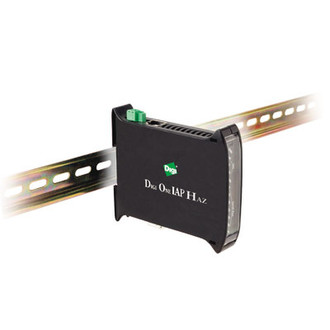
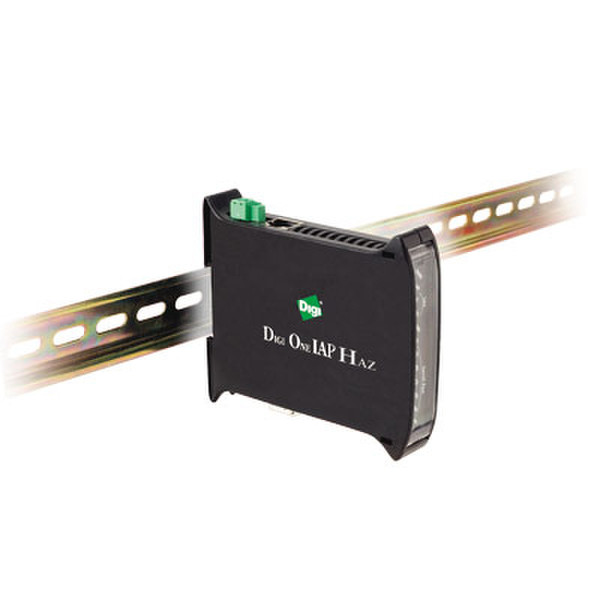
Digi One IAP Haz combines reliable serial-to-Ethernet connectivity with protocol conversion and interoperability. Users can IP enable a broad range of serial devices, as well as link two industrial devices. Designed for use in harsh environments, this rugged serial server is ideal for device management and monitoring applications where exposure to extreme temperatures, volatile liquids and gases are common. Its hardened design and Class 1, Division 2 certification ensure reliable performance in extreme conditions, reducing operating risk and the costs associated with application failure.
Digi One IAP Haz combines serial server functionality with a protocol bridge. Applications may communicate with the serial device using TCP/UDP or Digi’s patented RealPort® COM port redirection for remote native COM port access. RealPort enables existing applications to communicate, without modification, with serial devices over the Ethernet. By creating a Modbus bridge multiple Modbus/TCP masters can share Modbus serial slaves or Modbus serial Masters can access Modbus/TCP slaves.
Digi One IAP Haz supports a variety of serial (DF1, Modbus, ASCII) and Ethernet (ModbusTCP, AB/Ethernet, Ethernet/IP) protocols, allowing users to bridge serial and Ethernet devices, or both. Multi-master access allows multiple masters to communicate with a single slave across protocols. Digi One IAP Haz converts ASCII data from serial devices to Ethernet protocols. An additional serial port allows local devices to communicate with a slave unit, without disrupting the serial-to-Ethernet connection.