Technical details
| Serial ports quantity |
3 |
| Throughput data rate |
230 Kbit/s |
| Surge protection |
4 kV |
| Isolation |
1.5 kV |
| Electrostatic Discharge (ESD) protection |
15 kV |
| Serial interface type |
RS-232/422/485 |
| Data transfer rate |
100 Mbit/s |
| Ethernet LAN data rates |
10, 100 Mbit/s |
Management features
| Management protocols |
HTTP/HTTPS, CLI, SNMP |
Design
| Safety |
UL60950, CAN/CSA C22.2 No. 60950, EN60950 |
Protocols
| Supported network protocols |
UDP/TCP, DHCP/RARP/ARP-Ping, PPP, Telnet RFC 2217, Telnet, Reverse Telnet,Modbus to Modbus/TCP, SNMP |
Internal v.90/v.92 modem, 3 x RS-232/422/485 RJ-45, 1 x RJ-11, 10/100Base-T
Features:
- Internal v.90/v.92 modem
- Modem connection can act as backup during network failure
- Access remote devices and IP networks via internal modem
- 1- and 3-port models for application flexibility
- NIST FIPS-197 certified (secure AES)
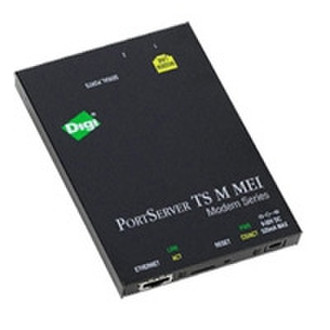
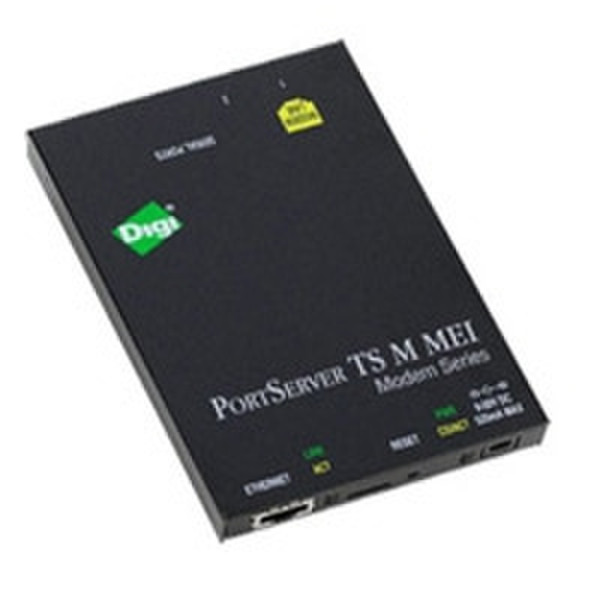
PortServer TS M MEI offers Ethernet and RS-232/422/485 serial connections, with the addition of an internal modem. The one- and three-port serial servers are ideal for applications requiring both IP networking and standard phone line dial-up connectivity for remote access to serial devices.
The embedded modem adds another level of flexibility to the PortServer TS line. It allows remote hosts to dial-in to a serial device attached to the Digi serial server, as well as the serial device to dial-out to a remote location using a standard phone line. The modem helps to create a PPP connection (TCP/IP connection over modem) so that applications and devices can communicate via an IP network, even when the primary LAN or WAN is not available. This allows users from a central location to maintain access to remote serial devices.
Other applications for PortServer TS M MEI include remote site console management for small branches and remote log-in via a TCP/IP network for easy troubleshooting, monitoring, configuration or control.