Processor
| Processor frequency |
3.4 GHz |
| L3 cache |
3 MB |
| Processor cores |
2 |
Ports & interfaces
| DisplayPorts quantity |
1 |
| HDMI ports quantity |
1 |
| Microphone in |
Y |
| Line-out |
Y |
| USB 3.0 (3.1 Gen 1) Type-A ports quantity |
2 |
| Headphone outputs |
1 |
Storage
| Card reader integrated |
N |
| Total storage capacity |
320 GB |
| Storage media |
HDD |
Memory
| Memory slots |
2x SO-DIMM |
| Internal memory |
2 GB |
| Internal memory type |
DDR3L-SDRAM |
| Maximum internal memory |
16 GB |
Additionally
| Chipset |
Intel H81 |
| Ethernet LAN (RJ-45) ports quantity |
1 |
| Ethernet LAN connection |
Y |
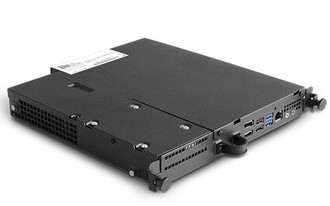
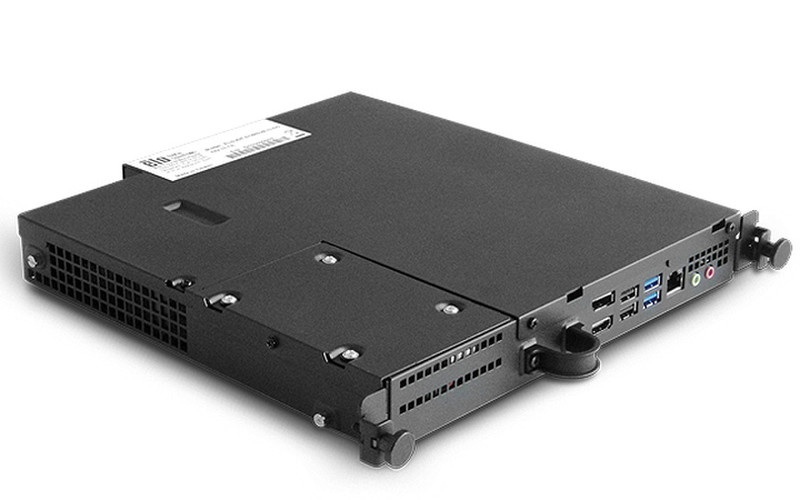
Intel Core i3-4130, 2 GB DDR3L SO-DIMM, 320 GB HDD, Intel HD 4400, Ethernet, USB 3.0, HDMI, DP
The Elo Interactive Digital Signage (IDS) touch platform featuring the Intel® Core™ 4th Generation CPUs with enhanced graphic engines enables increased customer engagement and immersive brand experiences by adding an exciting new dimension to traditional broadcast digital signage - the power of touch. Elo's ECMG2 computer modules, available for use with the Elo 3201L, 3202L, 4201L, 4202L, 4602L, 5501LT and 7001LT IDS touchscreens are well-suited for interactive media delivery and online collaboration for modern office environments. The computer modules are easily installed into the IDS display – avoiding costs of in-wall installation of a traditional player or PC. Computer modules are available in a choice of three models: ECMG2-i3 based on a 3.40GHz Intel® Core i3 processor and HD4400 graphics; ECMG2-i5 based on a 3.70GHz Intel® Core i5 processor and HD4600 graphics; and ECMG2-i7 based on a 4.00GHz Intel®Core i7 processor and HD4600 graphics.
Centralized management and security capabilities of Microsoft® Windows® ensures compatibility with many content management servers and web-based consoles for seamless connection with the internet, digital marketing, interactive whiteboard, building directory, virtual receptionist, and point-of-information (POI) applications.
The ECMG2 computer modules can support optimal partitioning of locally cached and network stored content, allowing developers to monitor and deploy content via device-to-device or web connections.