Technical details
| Analog signal format system |
NTSC, PAL, SECAM |
| Cable types supported |
Cat5e, Cat6 |
| Maximum transfer distance |
440 m |
| Frequency |
42 MHz |
| Type |
AV transmitter & receiver |
| Impedance |
100 Ω |
Ports & interfaces
| RJ-45 input ports |
1 |
| RJ-45 output ports |
1 |
| BNC input ports |
1 |
| BNC output ports |
1 |
Weight & dimensions
| Transmitter dimensions (WxDxH) |
29 x 60.4 x 20.4 mm |
| Transmitter weight |
60 g |
| Receiver weight |
60 g |
| Receiver dimensions (WxDxH) |
29 x 60.4 x 20.4 mm |
Power
| Operating voltage (transmitter) |
12 V |
| Operating voltage (receiver) |
36 V |
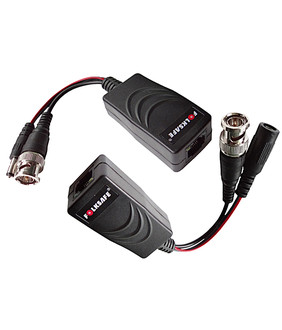
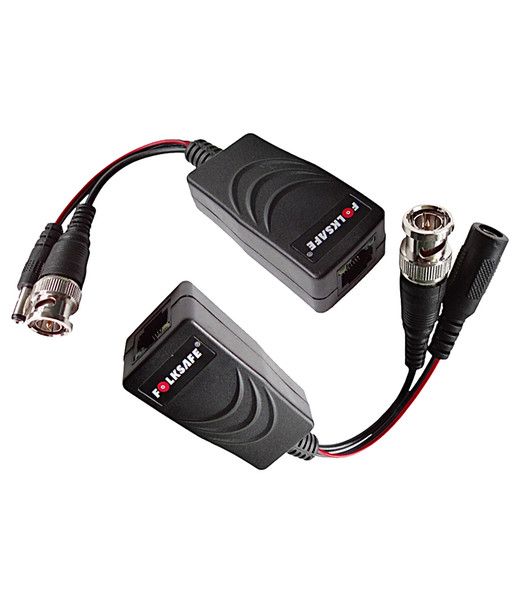
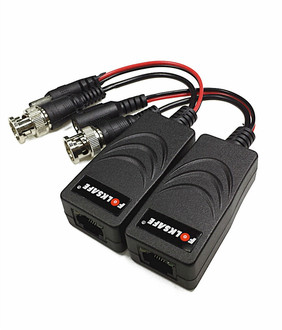
Single Channel HD Passive Video, Audio and Power Transmitter & Receiver
The FS-HD4301VPC is video & power transmitter and receiver that allows the transmission of real-time CCTV HD video and power signal via cost-effective unshielded Twisted Paired (UTP) cable. Baseband (composite) signals of any type are supported.
The FS-HD4301VPC is compatible with all HD-TVI, HD-CVI, AHD & CVBS analog cameras. The FS-HD4301PVC is able to convert 36VDC into regulated 12VDC which allows power transmission max up to 305m(1000ft). Used in pairs, FS-HD4301VPC eliminates costly and bulky coaxial cable.
The superior interference rejection and low emissions of the FS-HD4301VPC allow video & power signals to coexist in the same wire bundle as telephone, datacom, or low-voltage power circuits. This allows the use of a shared or existing cable plant. The FS-HD4301VPC is built-in surge suppressor to protect video equipment against damaging voltage spikes. Its crosstalk and noise immunity ensure quality video signals.
The FS-HD4301VPC is recommended to use with Unshielded Twisted Paired (UTP) wiring from 24AWG through 22AWG..Individually shielded pairs should be avoided, as they reduce the operating range of the systems drastically. Multi-pair cable (25-pair or more) with an overall shield are acceptable. Video signals can coexist in the same wire bundle as telephone, datacom, or low-voltages power circuits. While video may be routed through telephone punch-down block terminals, any bridge-taps, also called T-taps and any resistive, capacitive or inductive devices MUST BE removed from the pair.
For more specific information regarding wire types, gauges and proper installation techniques, please contact us for technical assistance.