Security
| Firewall security |
SPI, NAT |
| MAC address filtering |
N |
Other features
| Throughput |
` |
| xDSL connection |
N |
| Internal memory |
128 MB |
| Flash memory |
16 MB |
| Bandwidth |
2.4 GHz |
| Rack mounting |
N |
Ethernet LAN features
| Cabling technology |
10/100/1000Base-T(X) |
| Ethernet LAN interface type |
Gigabit Ethernet |
| Ethernet LAN data rates |
10, 100, 1000 Mbit/s |
Software
| Linux operating systems supported |
Y |
| Mac operating systems supported |
Y |
Wireless LAN features
| Top Wi-Fi standard |
IEEE 802.11ac |
| Wi-Fi standards |
IEEE 802.11ac, IEEE 802.11a, IEEE 802.11b, IEEE 802.11g, IEEE 802.11n |
Management features
| Quality of Service (QoS) support |
Y |
Protocols
| DHCP client |
N |
| DHCP server |
N |
Additionally
| Ethernet LAN connection |
Y |
| Ethernet LAN (RJ-45) ports quantity |
5 |
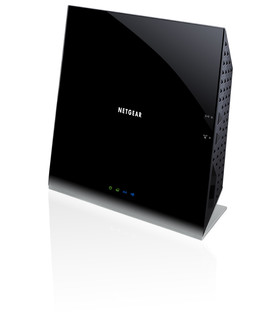
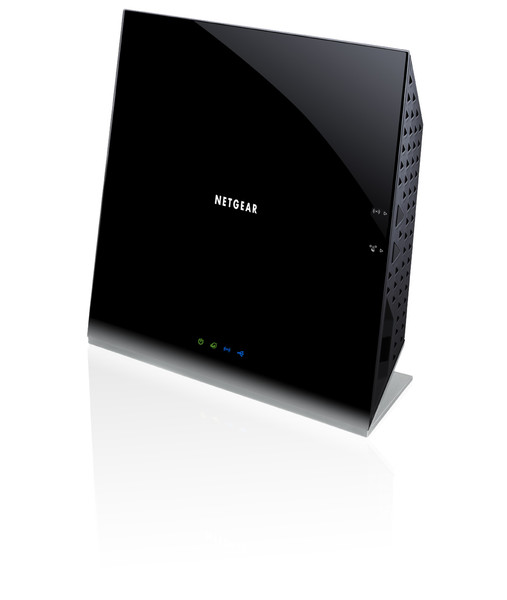
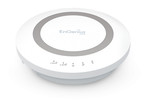
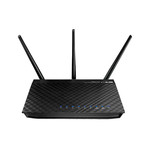
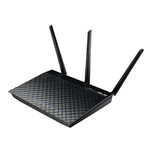
R6200 Wireless - IEEE 802.11 a/b/g/n/ac, 2.4 GHz/5.0 GHz, 5 x RJ-45, Gigabit Ethernet, 128 MB RAM, IPv6, WPA/WPA2—PSK, 654g
- Next generation WiFi – 300+867 Mbps speeds
- Better mobility for WiFi devices
- Ideal for current & future WiFi devices
- NETGEAR genie® app for computers & smartphones
The NETGEAR R6200 WiFi Router delivers next generation WiFi speeds with better range and speeds up to 867 Mbps.(1)
Compatible with next generation WiFi devices and backward compatible with 802.11 a/b/g/n devices, it enables HD streaming throughout your home. With up to 300+867 Mbps† speed and simultaneous dual band technology, the R6200 avoids interference, ensuring top WiFi speeds and reliable connections. This makes it ideal for larger homes with multiple devices. In addition, four Gigabit Ethernet ports offer ultra-fast wired connections. Wirelessly access and share USB hard drive or USB printer using the USB 2.0 port.
The NETGEAR genie® App provides easy installation from an iPad®, tablet, computer or smartphone. It includes a personal dashboard, allowing you to monitor, control and repair your home network.
(1)Maximum wireless signal rate derived from draft IEEE 802.11ac specifications, and final IEEE 802.11ac specifications may be different. Actual data throughput will likely be lower, and depends on network and environmental conditions, including volume of network traffic and building construction. 802.11ac 867 Mbps is approximately 3x faster than 802.11n 300 Mbps.